El valle de los neandertales:Parte 1
 |
| Excavaciones |
El valle de Lozoga, en la sierra madrileña de Guadarrama bien podría llamarse el valle de los neandertales, dice el paleontólogo Juan Luis Arsuaga. "Está protegido por dos cuerdas de montañas, rico en fauna, ecológicamente privilegiado e ideal para los neandertales, un buen cazadero para ellos". No es una hipótesis: en los yacimientos de Pinilla del Valle, junto al pantano, se han encontrado ya nueve dientes de neandertal, restos de fogatas y miles de fósiles de animales, incluidos enormes uros (cada uno es del tamaño de dos toros), rinocerontes y gamos, entre otros.
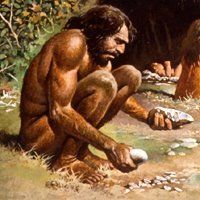 |
| Neanderthal |
Conocida porque se han encontrado numerosos vestigios de su existencia en Europa entre 20.000 y 30.000 años A.C. Desconocida por las muchas incógnitas, incluida la principal: ¿por qué se extinguieron justo cuando hizo su aparición en el continente nuestra especie?
Tampoco se sabe a ciencia cierta si eran capaces de hablar ni si convivieron en el territorio compartido con el Homo Sapiens o las dos especies se ignoraron hasta que una, la nuestra, proliferó y la otra se perdió para siempre... Los científicos que trabajan en los yacimientos de Pinilla del Valle pueden hacer aportes importantes para encontrar respuestas sobre la vida de los neandertales.
"En España hay una quincena de yacimientos de esa especie -en la Cordillera Cantábrica Levante y Andalucía- pero ninguno en la meseta, donde no hay formaciones de calizas y, por tanto, no hay cuevas adecuadas que pudieran preservar los vestigios humanos durante miles de años", añade Arsuaga. Pinilla del Valle es la excepción:"Aquí si hay calizas. Era como una visera de piedra en la que los neandertales se cobijarían a preparar la caza, tallar herramientas, comer... no es que vivieran dentro, en el sentido de vivienda: ellos vagaban por el campo y esto sería más bien un campamento en el que refugiarse cuando lo necesitaban. El yacimiento de mucho potencial, se extiende por unos 150 m y ahora estamos trabajando en tres zonas: la cueva del Camino, con tres rangos temorales distintos".Recalca el peculiar nombre, con guión, jugando con la idea de la cueva descubierta y ala vez con su descripción física: un alero rocoso que se desplomó dejando la superficie destapada...
No te pierdas mañana la segunda parte de este grán descubrimiento donde se descubren restos de una niña neandertal que define su cultura y posibles creencias.
New Study Sheds Light On Dinosaur Size

Dinosaurs were not only the largest animals to roam the Earth -- they also had a greater number of larger species compared to all other back-boned animals -- scientists suggest in a new paper published in the journal PLOS ONE.
The researchers, from Queen Mary, University of London, compared the size of the femur bone of 329 different dinosaur species from fossil records. The length and weight of the femur bone is a recognised method in palaeontology for estimating a dinosaur's body mass.
They found that dinosaurs follow the opposite pattern of body size distribution as seen in other vertebrate species. For example, within living mammals there tends to be few larger species, such as elephants, compared to smaller animals, such as mice, which have many species. The evidence from fossil records implies that in contrast there were many species of larger dinosaurs and few small species.
Dr David Hone from Queen Mary's School of Biological and Chemical Sciences, explains: "What is remarkable is that this tendency to have more species at a bigger size seemed to evolve quite early on in dinosaurian evolution around the Late Triassic period, 225 million years ago, raising questions about why they got to be so big.
"Our evidence supports the hypothesis that young dinosaurs occupied a different ecological niche to their parents so they weren't in competition for the same sources of food as they ate smaller plants or preyed on smaller size animals. In fact, we see modern crocodiles following this pattern -- baby crocodiles start by feeding off insects and tadpoles before graduating onto fish and then larger mammals."
Dr Eoin Gorman, also from Queen Mary's School of Biological and Chemical Sciences added: "There is growing evidence that dinosaurs produced a large number of offspring, which were immediately vulnerable to predation due to their smaller size. It was beneficial for the herbivores to grow to large size as rapidly as possible to escape this threat, but the carnivores had sufficient resources to live optimally at smaller sizes.
"These differences are reflected in our analyses and also offer an explanation why other groups do not follow a similar pattern. Several modern-day vertebrate groups are almost entirely carnivorous, while many of the herbivores are warm-blooded, which limits their size."
Paleontólogos encuentran fósil de gran reptil marino en Hungría

Un equipo de paleontólogos descubrieron restos fósiles de lo que sería una nueva especie de mosasaurio, el primero en su tipo en vivir en agua dulce.
Los expertos realizaron el descubrimiento en una mina al oeste de Hungría. Bautizado como Pannoniasaurus inexpectatus, el dinosaurio, con una estructura similar a la de un cocodrilo, habría habitado los ríos de agua dulce que existían en el Cretáceo y que separaban a África del sureste de Europa, hace 84 millones de años aproximadamente.
A diferencia de los mosasaurios que habitaban en los océanos, esta especie tenía patas como un lagarto terrestre, un cráneo más plano como los cocodrilos, y una cola distinta a los miembros de la familia de mosasaurios.

Los científicos creen que se adaptó a la vida en los ríos de la misma forma que los delfines de agua dulce de la actualidad.
"La evidencia que encontramos es que es similar al linaje de los cetáceos" señaló László Makádi, paleontólogo del Museo de Historia Natural de Hungría.
El equipo de expertos cree que el Pannoniasaurus podría haber sido
uno de los principales depredadores del ecosistema, el cual incluía peces, anfibios, lagartos, cocodrilos, tortugas y otros dinosaurios. Sus dientes relativamente pequeños sugieren que se alimentaba mayoritariamente de peces, anfibios y lagartos.
"El tamaño del Pannoniasaurus lo hace el depredador más grande hasta
ahora conocido en las aguas de este ambiente" explicó Makádi.
En el sitio de la excavación, los expertos encontraron miles de
fósiles pertenecientes a varios ejemplares de Pannonisaurus que variaban
en tamaño entre un metro a 4 metros. De acuerdo a las estimaciones, un ejemplar adulto podría llegar hasta los seis metros.
Michael Caldwell, un experto en mosasaurios de la Universidad de
Alberta en Canadá, cree que es poco probable que los mosausarios hayan
sido los únicos reptiles marinos en adaptarse al agua dulce. "Estoy seguro que deben existir plesiosaurios e ictiosaurios
de agua dulce también", señaló.

El descubrimiento fue publicado en la revista PLOS ONE.
Inside the Head of a Dinosaur: Research Reveals New Information On the Evolution of Dinosaur Senses

An international team of scientists, including PhD student Stephan Lautenschlager and Dr Emily Rayfield of the University of Bristol, found that the senses of smell, hearing and balance were well developed in therizinosaurs and might have affected or benefited from an enlarged forebrain. These findings came as a surprise to the researchers as exceptional sensory abilities would be expected from predatory and not necessarily from plant-eating animals.
Therizinosaurs are an unusual group of theropod dinosaurs which lived between 145 and 66 million years ago. Members of this group had evolved into up to 7m (23ft) large animals, with more than 50cm (20in) long, razor-sharp claws on their forelimbs, elongated necks and a coat of primitive, down-like feathers along their bodies. Although closely related to carnivorous dinosaurs such as Tyrannosaurus rex and Velociraptor, and in spite of their bizarre appearance, therizinosaurs were probably peaceful herbivores.
Inspired by this paradox, the international team of palaeontologists decided to take the first close look inside the heads of these enigmatic dinosaurs.
They studied the brain and inner ear anatomy of therizinosaurs using high-resolution CT scanning and 3D computer visualisation to find out more about their sensory and cognitive capabilities and how these had evolved with the transition from meat- to plant-eating.
The focus of the study was the skull of Erlikosaurus andrewsi -- a 3-4m (10-13ft) therizinosaur, which lived more than 90 million years ago in what is now Mongolia.
Lead author, Stephan Lautenschlager of Bristol's School of Earth Sciences said: "Our results suggest that therizinosaurs would have used their well-developed sensory repertoire to their advantage which, for herbivorous animals, must have played an important role in foraging, in the evasion of predators or in social complexity.
"This study sheds a new light on the evolution of dinosaur senses and shows it is more complex than we thought."
Co-author, Professor Lindsay Zanno of the North Carolina Museum of Natural History and the North Carolina State University agrees: "Once you've evolved a good sensory toolkit, it's probably worth hanging on to, whether you're hunting or being hunted."
Fellow author Lawrence Witmer, Chang Professor of Paleontology at the Ohio University Heritage College of Osteopathic Medicine said: "Of course the actual brain tissue is long gone from the fossil skulls but we can use CT scanning to visualize the cavity that the brain once occupied and then generate 3D computer renderings of the olfactory bulbs and other brain parts."
This study has important ramifications for our understanding of how sensory function evolved in different dinosaur groups and whether it was developed as a response to their environment or simply inherited by their ancestors. In particular, in the light of the transition from dinosaurs to birds, these results should prove to be very interesting.
Source:
http://www.sciencedaily.com/releases/2012/12/121219174154.htm
Los neandertales se adornaban con plumas

Un estudio internacional en el que ha participado el Consejo Superior de Investigaciones Científicas (CSIC) ha descubierto que los neandertales empleaban las alas de aves rapaces y córvidos como ornamentación, teoría que refuerza la idea de que tenían pensamiento simbólico y los acerca aún más al Homo sapiens. Los resultados fueron publicados en PLoS ONE.
Los resultados de este trabajo se basan en el estudio de los restos óseos de 21 especies de rapaces y córvidos encontrados en tres cuevas en Gibraltar. Los análisis indican que de 124 individuos, al menos 18 presentaban marcas de herramientas neandertales e incluso de dientes en las alas. “Estas extremidades están destinadas a funciones de vuelo, son muy ligeras y apenas tienen carne, por lo que creemos que no tenían un fin alimenticio, sino que empleaban las enormes plumas como ornamentación, tal y como siguen haciendo muchos pueblos indígenas en la actualidad”, explica el investigador Juan José Negro, de la Estación Biológica de Doñana.
Según este estudio, los neandertales mostraban predilección por las aves planeadoras con grandes plumas de color oscuro, como el quebrantahuesos, el buitre leonado, el milano real y el águila real, entre otras.
Como posible causa de la elección de estas aves y no otras, los investigadores apuntan al hecho de que gran parte de las aves encontradas formaban parte de la vida diaria de los neandertales: eran carroñeras y rapaces, moradoras de acantilados escarpados cercanos a sus abrigos y cuevas. “Las plumas son objetos muy ligeros, aportan belleza y volumen. Fueron seleccionadas en la naturaleza, además de para permitir el vuelo, como ornamento en las aves, por lo que es lógico pensar que los neandertales hicieran lo mismo”, concluye Negro.
Fuente:
Mundo neanderthal
Científicos descubren fósil del extinto lobo gigante en Nevada

Josh Bonde, geólogo de la Universidad de Nevada en Las Vegas descubrió el año pasado en el área de Tule Springs un hueso de una pata de un animal desconocido, y ahora científicos de Los Angeles han confirmado que perteneció a un lobo gigante.
"En la zona de Tule Springs se han encontrado varias especies, pero es emocionante llenar otra parte del mapa de este animal y revelar más acerca del ecosistema de la época de la glaciación al sur de Nevada" señaló Bonde.
El lobo gigante, también llamado lobo terrible, es un pariente mucho más grande del lobo actual, y vivió en el norte y sur de América por más de un millón de años. Según los científicos, la competencia de otras especies de lobos y la falta de comida llevó a su extinción hace 10.000 años.
El hueso fue identificado por Xiaoming Wang del Museo de Historia Natural del Condado de Los Angeles, y según estima, el hueso tiene entre 10.000 a 15.000 años de antigüedad.
"Este descubrimiento ayuda a descubrir el ecosistema del Pleistoceno en el sur de Nevada, y demuestra que todavía hay importantes descubrimientos por hacer en los canales de Las Vegas" señaló Steve Rowland, uno de los geólogos que participó en la excavación. "Para entender por qué algunas especies se extinguen y otras no necesitamos aprender lo más posible de los hábitos depredadores y qué especies eran especialmente sensibles a los cambios en el ambiente".
Este anuncio ocurrió luego de que los investigadores del Museo del Condado de San Bernardino descubrieran los restos de un dientes de sable en los canales.
Researchers Find First Evidence of Ice Age Wolves in Nevada!
A University of Nevada, Las Vegas research team recently unearthed
fossil remains from an extinct wolf species in a wash northwest of Las
Vegas, revealing the first evidence that the Ice Age mammal once lived
in Nevada.
The metapodial, or foot bone, was uncovered late last year by UNLV
geologist Josh Bonde during a survey of the Upper Las Vegas Wash. They
have now confirmed that the bone comes from a dire wolf.
The discovery site is near the proposed Tule Springs Fossil Beds
National Monument, a fossil-rich area known for its diversity and
abundance of Ice Age animal remains. Scientists estimate the fossil to
be 10,000 to 15,000 years old during the Late Pleistocene period.
"Dire wolves are known to have lived in almost all of North America
south of Canada, but their historical presence in Nevada has been absent
until now," said Bonde, a UNLV geology professor. He was a Ph.D.
student at the university when he discovered the bone.
"The Tule Springs area has turned up many species, but it's exciting
to fill in another part of the map for this animal and reveal a bit more
about the Ice Age ecosystem in Southern Nevada."
The dire wolf, a larger relative of the gray wolf, was present in
much of North and South America for more than a million years.
Scientists theorize that competition from other wolf species and a
possible food scarcity led to its extinction roughly 10,000 years ago.
Foot bones of the extinct dire wolf are difficult to distinguish from
those of the gray wolf. Researchers conclude bone is likely from a dire
wolf because of the abundance of dire wolf fossils―and scarcity of gray
wolf fossils―in similar-aged excavation sites throughout the Southwest.
Fossil remains of dire wolves are abundant in the La Brea tar pits
and have been found in other Southwestern states. Many of the same
species of Ice Age animals found at La Brea have also been recovered in
the Las Vegas Valley, including Columbian mammoths, camels, horses,
bison, and ground sloths.
"This discovery helps flesh out Southern Nevada's Pleistocene
ecosystem and shows that there are still important discoveries to be
made in the Upper Las Vegas Wash," said UNLV geology professor Steve
Rowland, a collaborator with Bonde on the study of local Ice Age
fossils. "To understand why certain species became extinct and others
did not, we need to learn as much as possible about predatory habits and
which species were especially sensitive to changes in the environment."
The announcement comes on the heels of a recent discovery in the same
wash of a saber-tooth cat by researchers from the San Bernardino County
Museum. Like dire wolves, saber-tooth cats were Pleistocene predators
that had been conspicuously absent from the Southern Nevada fossil
record.
According to Rowland, Tule Springs was a spring-fed, swampy area
during periods of the Late Pleistocene, an ideal spot for plant-eating
animals and their carnivorous predators.
The recent discoveries come exactly 50 years after scientists
conducted a 'big dig' at Tule Springs, revealing the site to be rich
with Ice Age fossils.
"Tule Springs likely had the highest density of large animals in the
area during the Late Pleistocene, and the marshy environment was very
good for preserving at least some of the bones and teeth of animals that
died there," said Rowland.
"In the 50 years since the 'big dig,' the scientists have confirmed
that humans interacted with Ice Age animals. We now have a new list of
questions about life and death in the Pleistocene, and a new tool kit of
research techniques to help us get the answers."
The identity of the find was confirmed by Xiaoming Wang of the Los
Angeles County Museum of Natural History, an expert on extinct species
of the dog family. Bonde has been surveying the Tule Springs area since
2007, and he and a group of UNLV undergraduate studentss are prospecting
for more fossils.
The center of the original 'big dig' is on the same parcel of land where Bonde discovered the wolf fossil.
The dire wolf bone, in addition to other bones collected by UNLV researchers, are cataloged, studied, and stored at UNLV.

